
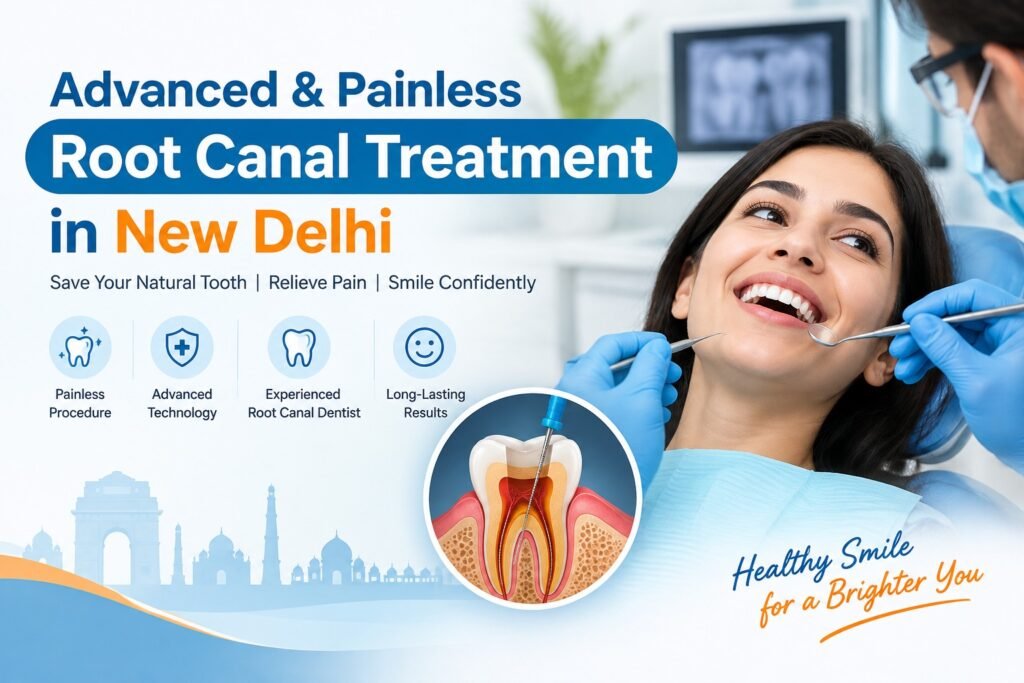
Advanced & Painless Root Canal Treatment in New Delhi
A sudden toothache can turn an ordinary day into an uncomfortable experience. You may find yourself avoiding your favourite foods, struggling to sleep, or feeling sharp pain whenever you drink something hot or cold. While occasional sensitivity can have several causes, persistent tooth pain may indicate that the inner part of the tooth has become infected or damaged. In such situations, timely dental care can help protect the natural tooth and prevent the problem from becoming more complicated. Modern dentistry has made root canal procedures much more comfortable than many people imagine. With proper diagnosis, advanced dental techniques, effective local anaesthesia, and careful treatment planning, patients can undergo treatment with significantly less discomfort. If you have been searching for root canal treatment in New Delhi, understanding the procedure, warning signs, benefits, and aftercare can help you make an informed decision about your dental health. What Is a Root Canal Treatment? A root canal treatment, commonly called RCT, is a dental procedure used when the soft tissue inside a tooth becomes inflamed or infected. This inner area, known as the dental pulp, contains nerves and blood vessels. Deep tooth decay, cracks, dental trauma, repeated dental procedures, or untreated cavities can sometimes allow bacteria to reach the pulp. Once the pulp is significantly infected or damaged, simply treating the outer surface of the tooth may not be enough. During a root canal, the dentist carefully accesses the affected area, removes infected or damaged pulp tissue, cleans and disinfects the internal canals, and seals them. The tooth may then be restored with a suitable filling or crown, depending on how much tooth structure remains. The objective is not simply to stop the pain. The goal is to remove infection, preserve the natural tooth, restore its function, and help prevent further dental complications. Why Do You Need a Root Canal? Not every toothache requires RCT. A dentist needs to examine the tooth and may recommend dental X-rays or other diagnostic methods before deciding on treatment. Some common warning signs include: Ignoring these symptoms can allow a dental infection to progress. In some cases, the infection may spread to surrounding tissues, making treatment more complicated. That is why early consultation with a qualified dental professional is important whenever tooth pain persists. Is Root Canal Treatment Really Painless? One of the biggest reasons people delay dental treatment is fear of pain. The good news is that modern dentistry focuses heavily on patient comfort. A painless root canal treatment in New Delhi generally involves local anaesthesia to numb the affected area before the procedure begins. Modern instruments and techniques can also help dentists perform treatment more precisely and efficiently. You may feel pressure or movement during treatment, but the procedure should not be expected to feel like the severe toothache that brought you to the clinic in the first place. Patient comfort can also depend on the condition of the tooth, the level of infection, the complexity of the root canal system, and individual sensitivity. An experienced dentist will assess these factors and explain what you can expect before treatment begins. How Advanced Root Canal Treatment Works An advanced root canal treatment in Delhi may involve modern diagnostic and treatment techniques designed to improve precision, infection control, and patient comfort. Although every case is different, the general treatment process includes several stages. 1. Dental Examination The dentist first evaluates your symptoms, examines the affected tooth, and may take an X-ray. This helps identify the source of the problem and understand the structure of the tooth. 2. Local Anaesthesia Before treatment begins, local anaesthesia is administered to numb the treatment area. This helps make the procedure considerably more comfortable. 3. Accessing the Tooth A small opening is made in the tooth to reach the infected or damaged pulp chamber. 4. Cleaning the Canals The infected or inflamed pulp is removed. The root canals are carefully cleaned and shaped so that bacteria and affected tissue can be eliminated as thoroughly as possible. 5. Sealing the Tooth After cleaning and disinfection, the canals are filled and sealed with suitable dental material. Proper sealing is important because it helps reduce the risk of bacteria entering the treated area again. 6. Final Restoration A treated tooth may require a permanent filling or dental crown depending on its location, strength, and remaining structure. Back teeth often experience considerable chewing pressure, so your dentist may recommend additional protection. How Long Does Root Canal Treatment Take? The treatment time varies from person to person. A relatively straightforward case may require fewer appointments, while teeth with complex canal anatomy, extensive infection, or other complications may require additional treatment. Your dentist can provide a more accurate timeline after examining your tooth. The important thing is not to judge treatment solely by the number of appointments. Thorough cleaning, accurate diagnosis, proper sealing, and appropriate restoration are essential parts of protecting the treated tooth. Benefits of Root Canal Treatment Choosing timely treatment can provide several important benefits: Preserves Your Natural Tooth One of the biggest advantages of RCT is that it can help save a natural tooth that might otherwise require extraction. Helps Relieve Dental Pain When the infected pulp is removed and the source of inflammation is treated, the severe pain associated with the infection can be addressed. Restores Normal Function Once the tooth has been properly restored, it can generally be used for normal chewing and biting. Helps Control Infection Cleaning and sealing the internal canal system helps address the infection inside the tooth and reduce the possibility of further problems. Maintains Your Smile Preserving a natural tooth can help maintain your existing smile and avoid the immediate need to replace the tooth with another dental solution. Root Canal Treatment vs Tooth Extraction When a tooth is badly infected, patients sometimes assume extraction is the easiest option. However, saving the natural tooth may be possible depending on its condition. A root canal dentist in New Delhi can assess whether the tooth can be restored. If the
Advanced & Painless Root Canal Treatment in New Delhi Read More »